

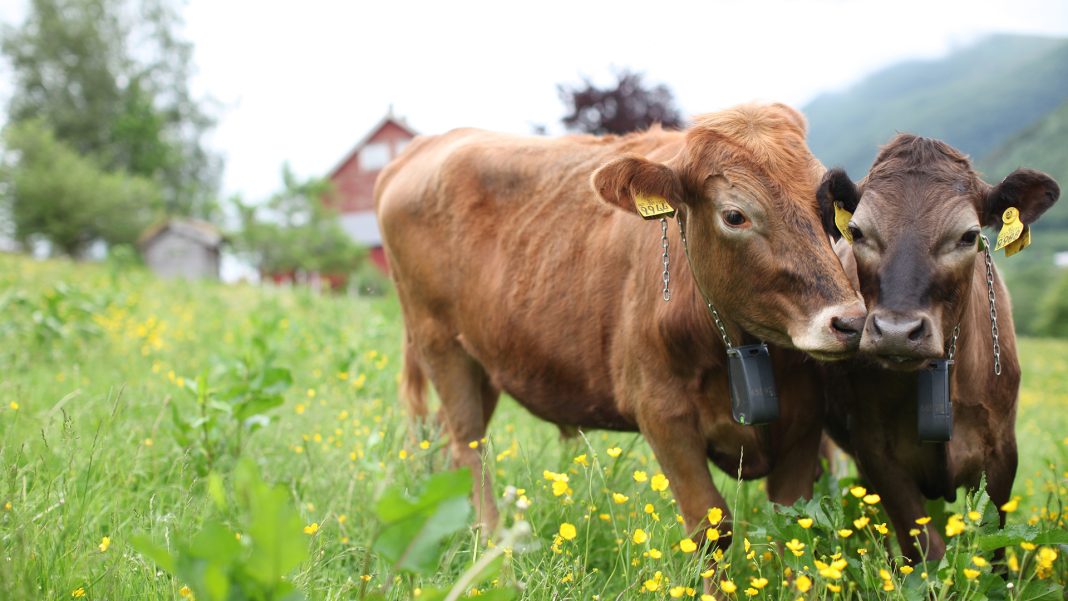
Virtual fencing technology is transforming livestock management by allowing more cattle to graze freely on pastures instead of being confined to barns. Farmers report improvements in animal welfare and land use efficiency.
The technology uses GPS-enabled collars to create invisible boundaries. Cattle receive gentle signals when approaching limits, guiding them without physical fences. This method allows farmers to manage large herds over expansive land safely and efficiently.
Farmers say the system provides flexibility. Grazing patterns can be adjusted remotely, rotating cattle across pastures to prevent overgrazing. The approach also reduces labor and material costs associated with building and maintaining traditional fences.
Animal welfare experts note that access to open pasture benefits cattle physically and mentally. Grazing allows animals to express natural behaviors, improves exercise, and reduces stress, leading to healthier herds and better meat or milk quality.
Land management specialists point out that virtual fencing can enhance soil health. Rotational grazing supports grass regrowth, reduces soil erosion, and increases biodiversity by creating diverse habitats for wildlife.
Early adopters of the technology have seen impressive results. Herds previously kept in barns are now grazing more efficiently, and farms can maintain larger numbers of cattle without expanding physical infrastructure. The system also enables better tracking of individual animals’ health and movements.
Environmentalists highlight the potential sustainability benefits. With proper pasture rotation, virtual fencing can reduce the carbon footprint of livestock farming. Healthier soils store more carbon, and fewer feed resources are required when animals graze naturally.
Researchers are studying how virtual fencing impacts both animals and land. Data collected from collars helps scientists understand grazing behavior, optimize pasture use, and improve herd management strategies. The technology provides insights that were difficult to achieve with traditional fencing.
Farmers report that the cattle adapt quickly to the new system. Gentle warnings and audio cues help animals learn boundaries, and most adjust within a few days. Observers note that the method is humane and non-invasive, avoiding stress associated with electric or physical fencing.
The technology also allows farmers to respond quickly to environmental conditions. For example, parts of a pasture can be temporarily restricted during wet periods to prevent soil damage, or open space can be adjusted seasonally to provide fresh forage.
Virtual fencing has attracted attention from the agricultural community worldwide. Countries with large grazing areas are exploring adoption, seeing benefits in cost savings, animal health, and sustainable land use. Pilot programs have been implemented across Europe, North America, and Australia.
The innovation demonstrates how technology can improve traditional farming practices. By combining GPS, data analytics, and animal behavior understanding, farmers achieve better outcomes for livestock, land, and the environment.
Community engagement has also increased. Educational tours and workshops show students and local residents how virtual fencing works, raising awareness of sustainable farming practices and the benefits of animal welfare-focused innovations.
Experts stress that while virtual fencing is not a replacement for all physical fences, it complements traditional methods. Together, they provide flexibility, security, and sustainability in modern livestock management.
This technology marks a shift toward smarter, more humane, and environmentally friendly farming. By enabling cattle to graze more freely, farmers can maintain healthier herds, protect land resources, and improve efficiency.
As adoption grows, virtual fencing is expected to reshape livestock farming, offering a model for balancing productivity, sustainability, and animal welfare in agriculture. It is a prime example of how innovation can create win-win outcomes for farmers, animals, and the environment.

