Close Menu
    Facebook X (Twitter) Instagram
    Facebook X (Twitter) Instagram
    Sofia Mirror
    Subscribe
    • Business & Economy
    • Education
    • Entertainment
    • Health
    • Media
    • News
    • Opinion
    • Sports
    • Real Estate
    • More
      • Culture & Society
      • Travel & Tourism
      • Politics & Government
      • Environment & Sustainability
      • Technology & Innovation
    Sofia Mirror
    Home»Environment & Sustainability»India’s Solar Growth Faces a Looming Waste Crisis
    Environment & Sustainability

    India’s Solar Growth Faces a Looming Waste Crisis

    Grace JohnsonBy Grace JohnsonDecember 26, 2025No Comments4 Mins Read
    Share Facebook Twitter Pinterest LinkedIn Tumblr Email
    Follow Us
    Google News Flipboard Threads
    Share
    Facebook Twitter LinkedIn Pinterest Email

    India’s solar expansion wins global praise. Yet the rapid transition hides a growing environmental threat.

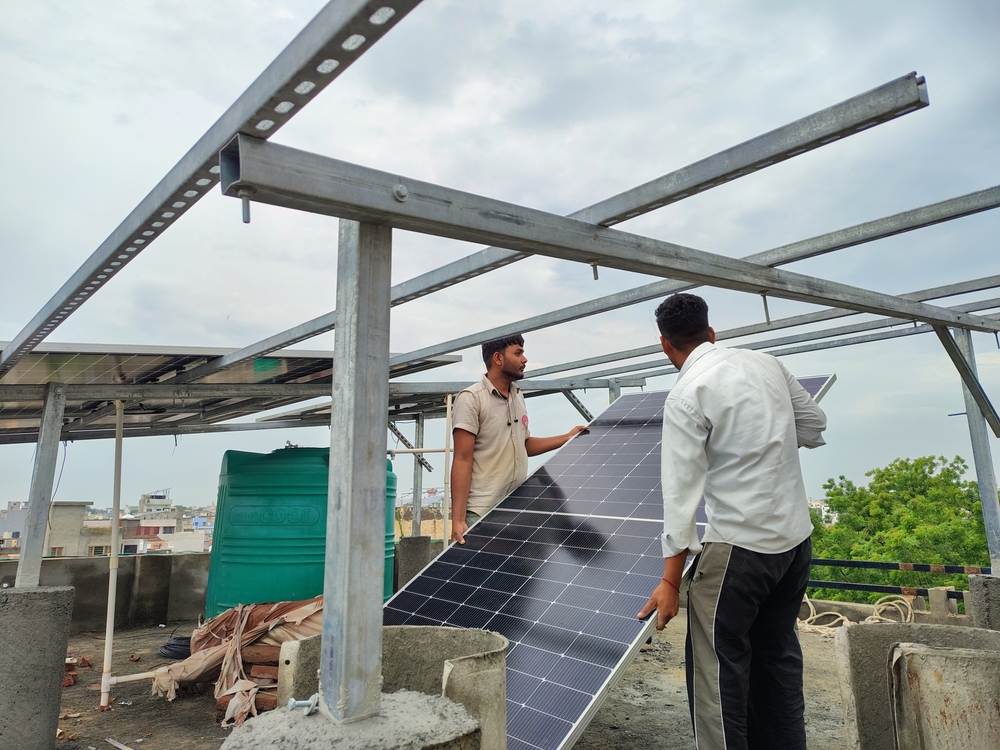
    In just over a decade, India became the world’s third-largest solar power producer. Renewable energy now drives national climate policy. Solar panels stretch across massive parks and cover rooftops nationwide.

    Large utility-scale projects supply most solar electricity. Millions of rooftop systems also feed power into the grid. Government figures show nearly 2.4 million households adopted solar under subsidy schemes.

    Solar growth reduced reliance on coal-fired power. Thermal and other non-renewables still account for over half of installed capacity. Solar now contributes more than 20 percent. This success brings a pressing challenge.

    Clean Energy, Complex Afterlife

    Solar panels deliver clean electricity during operation. Disposal after retirement can harm the environment if mismanaged.

    Panels consist mainly of glass, aluminium, silver, and polymers. They also contain small amounts of toxic metals. Lead and cadmium can contaminate soil and water when mishandled.

    Most panels last about 25 years. Owners then remove and discard them. India lacks a dedicated recycling budget. Only a few small facilities currently handle old panels.

    India releases no official solar waste data. One estimate placed volumes near 100,000 tonnes by 2023. Projections suggest 600,000 tonnes by 2030. Experts warn the real surge is yet to come.

    The Waste Wave on the Horizon

    Experts caution that the largest impact will arrive in the next decade. Without early investment, recycling systems may collapse.

    The Council on Energy, Environment and Water projects India could generate more than 11 million tonnes of solar waste by 2047. Managing this would require nearly 300 recycling facilities. Investment needs could reach 478 million dollars.

    Most large solar parks were built in the mid-2010s. The main waste wave will hit in 10 to 15 years, says Rohit Pahwa of Targray. Immediate planning is crucial.

    India’s projections mirror global trends. The United States could generate 170,000–1 million tonnes by 2030. China could approach one million tonnes after rapid expansion.

    Regulation Struggles to Keep Up

    Countries handle solar waste under very different systems. Regulation often trails rapid deployment.

    In the United States, recycling depends largely on market forces. State rules create fragmented oversight. China, like India, continues developing its framework. Both lack fully mature national systems.

    India included solar panels under electronic waste rules in 2022. Manufacturers must collect, dismantle, and recycle panels at the end of life. Enforcement remains inconsistent.

    Experts highlight gaps in household installations. Home systems represent five to ten percent of capacity. These units remain hard to track and recycle. Their combined waste still matters.

    From Rooftops to Landfills

    Broken or discarded panels often end up in landfills. Others move through informal recycling networks. Unsafe methods can release toxic substances. Authorities have not provided detailed public responses.

    Environmental expert Sai Bhaskar Reddy Nakka warns against false confidence. Solar energy appears clean for two decades. Without recycling, it could leave abandoned modules behind.

    Challenges also create economic opportunity. Rising waste will drive demand for specialised recycling firms, Pahwa says.

    Efficient recycling could recover 38 percent of materials by 2047. It could also prevent 37 million tonnes of emissions from mining. The CEEW study highlights these benefits.

    India already trades recycled glass and aluminium. Recycling can also recover silicon, silver, and copper. These materials can support new panels or other industries, says study co-author Akansha Tyagi.

    Current recycling methods remain basic. Operators mainly recover low-value materials. Precious metals often disappear or yield minimal returns.

    A Decade That Will Decide India’s Solar Future

    Experts say the next ten years will shape India’s solar legacy. The country must build a regulated recycling system. Public awareness must increase. Waste collection must integrate into solar business models.

    Companies profiting from solar power should manage panels after failure, Nakka argues. Responsibility should not end with installation.

    Without proper recycling, today’s clean energy could become tomorrow’s environmental crisis.

    Share. Facebook Twitter Pinterest LinkedIn Tumblr Email
    Grace Johnson
    • Website
    • Facebook

    Grace Johnson is a freelance journalist from the USA with over 15 years of experience reporting on Politics, World Affairs, Business, Health, Technology, Finance, Lifestyle, and Culture. She earned her degree in Communication and Journalism from the University of Miami. Throughout her career, she has contributed to major outlets including The Miami Herald, CNN, and USA Today. Known for her clear and engaging reporting, Grace delivers accurate and timely news that keeps readers informed on both national and global developments.

    Related Posts

    Olympic Skiers Warn of ‘Dangerous Trend’ as Glaciers Rapidly Recede

    February 18, 2026

    Arctic Shipping Boom Fuels Faster Ice Melt and Climate Risks

    February 9, 2026

    Neighbouring Plants Warn Each Other of Incoming Stress, Study Finds

    January 21, 2026

    Comments are closed.

    Latest News

    Middle East Crisis Escalates After US-Israel Strikes on Iran

    Rachel MaddowFebruary 28, 2026

    Israel Conducts Wide-Ranging Attack The Israeli military has carried out a major strike on Iran’s…

    Trump Bars Anthropic From Federal AI Projects in Escalating Pentagon Showdown

    Grace JohnsonFebruary 28, 2026

    US President Donald Trump has ordered all federal agencies to immediately stop using technology from…

    Rising Tensions on the Pakistan-Afghanistan Border Spark Fears of War

    Rachel MaddowFebruary 27, 2026

    Pakistan Strikes Back After Taliban Attacks Tensions between Pakistan and Afghanistan escalated sharply after months…

    Burger King Tests AI Headset to Analyse Customer Service Language

    Andrew RogersFebruary 27, 2026

    Burger King has introduced an artificial intelligence assistant in hundreds of US restaurants.The system connects…

    Top Trending

    Meta under investigation for AI child safety scandal

    Grace JohnsonAugust 18, 2025

    A US senator has launched an investigation into Meta. A leaked internal document reportedly showed…

    AI-Powered Medical Support in Space

    Rachel MaddowAugust 18, 2025

    Google and NASA work together on the “Crew Medical Officer Digital Assistant” to address astronaut…

    Blistering heat and wildfires grip Spain and Portugal

    Lester HoltAugust 18, 2025

    Record-breaking temperatures heighten fire risks Southern Europe is enduring intense heat alongside devastating wildfires. In…

    Researchers achieve breakthrough in cocoa fermentation

    Andrew RogersAugust 18, 2025

    Led by Prof. David Salt, the team analyzed beans from three Colombian regions, revealing microbes…

    Sofia Mirror delivers powerful stories, breaking news, sports, and culture—bringing bold perspectives and timely updates to keep readers informed, inspired, and connected worldwide.

    We’re social. Connect with us:

    © 2026 Sofia Mirror. All Rights Reserved.
    Facebook X (Twitter) YouTube

    CATEGORIES

    • Business & Economy
    • Culture & Society
    • Education
    • Entertainment
    • Environment & Sustainability
    • Health
    • Media
    • News
    • Opinion
    • Politics & Government
    • Real Estate
    • Sports
    • Technology & Innovation
    • Travel & Tourism
    • Business & Economy
    • Culture & Society
    • Education
    • Entertainment
    • Environment & Sustainability
    • Health
    • Media
    • News
    • Opinion
    • Politics & Government
    • Real Estate
    • Sports
    • Technology & Innovation
    • Travel & Tourism

    IMPORTANT LINKS

    • Contact Us
    • Privacy Policy
    • Terms and Conditions
    • Disclaimer
    • Imprint
    • Contact Us
    • Privacy Policy
    • Terms and Conditions
    • Disclaimer
    • Imprint

    Type above and press Enter to search. Press Esc to cancel.