

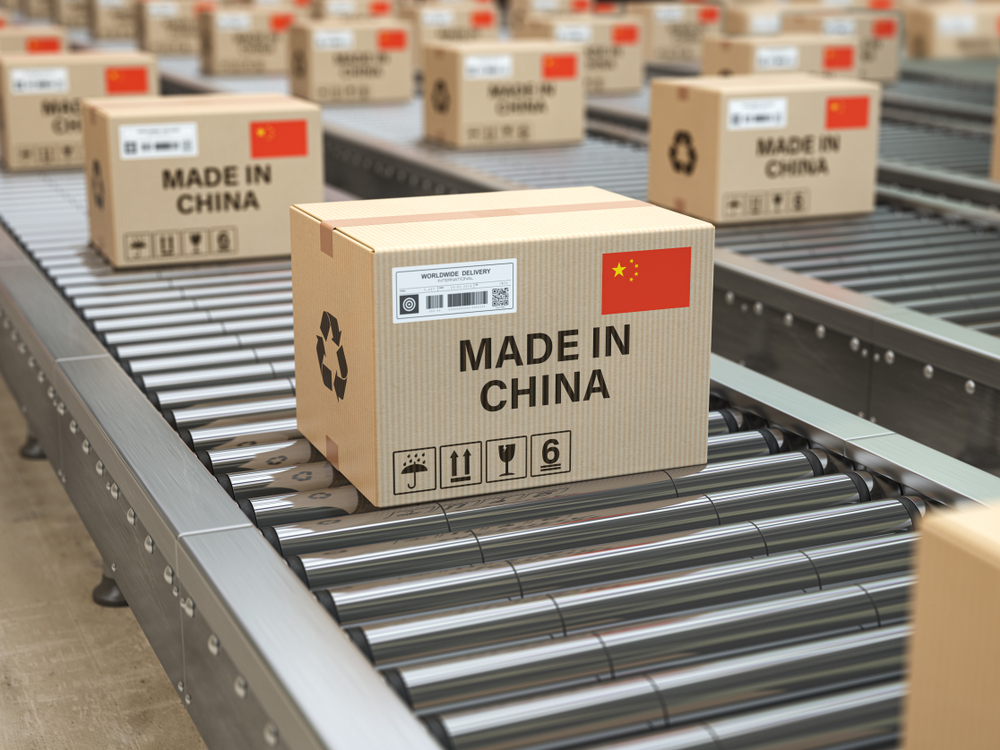
China’s rising exports threaten Europe, and Goldman Sachs predicts GDP losses in Germany, Italy, France, and Spain.
Beijing ramps up its export-led recovery, leaving European economies exposed to mounting global trade competition.
Goldman Sachs cut its European growth forecasts in response to China’s expanding export surge.
Economist Giovanni Pierdomenico warns that growing Chinese goods supply widens Europe’s trade deficit and weakens its global competitiveness.
He adds that euro-area GDP could drop by about 0.5% by 2029.
Goldman estimates Germany will lose 0.9% GDP, Italy 0.6%, and France and Spain 0.4% each over the next four years.
Europe faces substitution pressure as Chinese products replace European goods in international markets.
Goldman calculates eurozone exports lost up to four percentage points of market share to China in the past five years.
For each additional dollar of Chinese exports, European exports fall by twenty to thirty cents.
This displacement steadily erodes Europe’s industrial edge.
Europe Struggles to Respond
The EU launched initiatives like the Critical Raw Materials Act and the AI Continent Action Plan, but Goldman doubts their effectiveness.
Analyst Filippo Taddei says Europe’s vulnerabilities limit its ability to counter China.
Goldman highlights Europe’s reliance on China for essential inputs, restricting broad measures against Chinese products.
Analysts warn that structural dependence on foreign suppliers persists despite new programmes.
The bank also notes that available funding remains insufficient to restore European export competitiveness.
Experts caution that timid policies could accelerate industrial decline, while aggressive tariffs might disrupt essential supply chains.
Industrial Strategy and Sovereignty at Stake
Goldman highlights defence as the only sector where Europe invests significantly, backing the Readiness 2030 programme with €150 billion in loans.
Even defence relies heavily on Chinese raw materials, particularly rare earths for weapons, drones, sensors, and advanced electronics.
Analysts emphasize that Europe risks losing ground in key industries without a unified, assertive industrial strategy.
They stop short of advocating protectionism but question Europe’s ability to achieve industrial sovereignty.
Policymakers must consider how long fiscal support and consumer resilience can shield Europe from intensifying global competition.

